Have you ever wondered why some hospitals and clinics are instantly trusted by patients while others struggle to stand out? The answer often lies in healthcare branding. A strong brand image helps healthcare organizations show their value, build trust, and create a positive image in the minds of patients. When people recognize a hospital’s name, logo, or reputation, they feel more confident about choosing it for their care.
The way patients discover healthcare providers has undergone a major transformation in recent times. Most people search online before booking an appointment or visiting a clinic. This is where digital marketing for healthcare becomes significant. Agencies providing these services help healthcare organizations leverage social media and online content to share their message, connect with patients, and strengthen their brand presence in the digital world.
What is Healthcare Branding?
Just like businesses in other industries, healthcare providers also need to stand out, build a strong reputation, and form meaningful connections with their patients. Healthcare branding is about creating a clear identity and personality for healthcare organizations such as hospitals, clinics, and even individual doctors.
For hospitals, branding is not only about having an attractive logo or a catchy tagline, although these can help. It is more about the overall experience patients have with the healthcare provider. Every interaction, from the first phone call to the care received during treatment, shapes how people view the hospital.
Think about what comes to mind when you hear the name of a hospital. You might think about the quality of care, the kindness of the staff, or the hospital’s expertise in certain medical treatments. All these perceptions are part of healthcare branding.
Why Healthcare Branding Matters
There are many reasons why healthcare organizations should focus on building a clear brand. Branding plays an important role in healthcare marketing because it shapes how people see a hospital, clinic, or doctor. It can influence whether patients view a provider as reliable, professional, and capable.
- Branding in Healthcare Marketing Has Changed
Technology has changed how people look for healthcare services. The healthcare industry has also adapted to these changes. Policies like the Affordable Care Act introduced online healthcare marketplaces where patients can compare services and providers.
In the past, healthcare choices were mostly influenced by insurance networks and employers. Today, patients can search online, read reviews, and access information about different healthcare providers. This has changed how healthcare organizations approach branding and marketing.
- The Healthcare Marketing Space Is Competitive
The healthcare industry has also shifted its focus. Instead of concentrating only on treating diseases, many organizations now focus on prevention, health monitoring, and early testing. This change has created new services and opportunities for both providers and patients.
At the same time, competition among healthcare providers has increased. Many healthcare brands now communicate directly with patients rather than relying only on referrals from other providers. Due to this, maintaining a strong healthcare brand reputation has become important, especially in digital platforms where patients search for services.
- Patients Have More Choices in Healthcare
Earlier, patients often chose hospitals based mainly on location or insurance coverage. Today, people have more options. Patients may compare healthcare providers based on cost, reputation, and available services before making a decision.
For this reason, healthcare organizations need to pay attention to how their brand is viewed by the public. A clear brand identity and positive reputation can influence patient decisions.
- Medical Branding Helps Build Trust
In healthcare, trust is an important part of building a brand. Patients expect healthcare providers to be honest, transparent, and consistent in their services.
Branding in healthcare is usually built over time through reliable services, clear communication, and consistent patient experiences. These efforts also contribute to building patient trust in healthcare branding, which plays an important role when people decide where to seek medical care. Every part of a healthcare brand contributes to how people see the organization. This includes marketing materials, the information shared online, and how healthcare providers interact with patients on digital platforms.
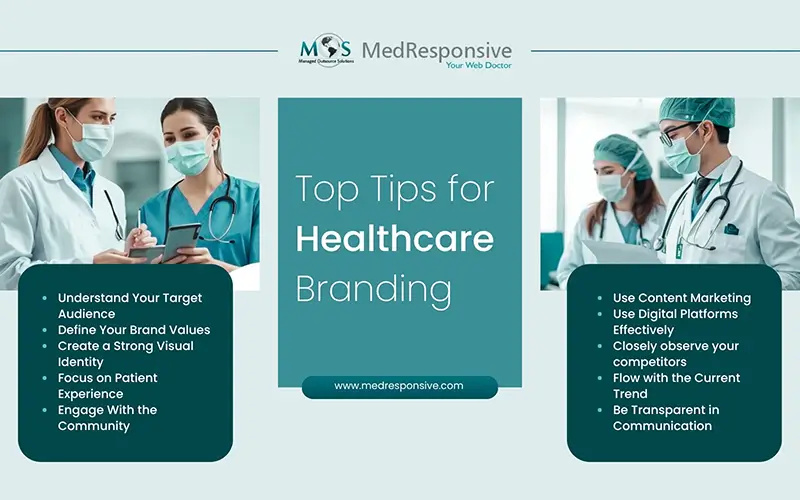
Strategies for Effective Healthcare Branding
Strong healthcare marketing strategies help organizations communicate their services clearly and present a consistent image to patients.
- Understand Your Target Audience
The first step in healthcare branding is to clearly understand your audience. Healthcare organizations should know who their patients are and what they need. This includes their age group, health concerns, lifestyle, and expectations from medical services. When a healthcare provider understands its audience, it becomes easier to create services and messages that are relevant to them. This helps the organization communicate in a way that patients can easily understand and relate to. - Define Your Brand Values
Healthcare organizations should clearly define their core values and mission. These values explain what the organization stands for and how it wants to serve patients. For example, a hospital may focus on patient safety, medical expertise, or accessible healthcare services. When these values are clearly communicated, patients can understand what makes the healthcare provider stand out from others. This also helps the organization maintain consistency in its services and communication. - Create a Strong Visual Identity
A clear visual identity helps people recognize a healthcare brand. This includes the logo, color scheme, fonts, and overall design style. These visual elements should look professional and be easy to recognize. They should also be used consistently across all platforms such as websites, brochures, and social media pages. When visual elements are used in the same way everywhere, the brand becomes easier for people to remember. - Focus on Patient Experience
Patient experience plays an important role in healthcare branding. Every interaction with a patient affects how the organization is perceived. This includes appointment scheduling, communication with staff, waiting time, and treatment services. When patients receive clear communication and organized care, they are more likely to have a positive impression of the healthcare provider. Good patient experiences can strengthen the reputation of the brand. - Engage With the Community
Healthcare providers can strengthen their brand by being active in their communities. This may include organizing health awareness programs, free health screenings, or educational workshops. These activities help people learn more about healthcare services and available treatments. Community engagement also shows that the healthcare organization supports public health and local initiatives. - Use Content Marketing
Content marketing is another useful strategy for healthcare branding. Healthcare organizations can share helpful information through blogs, videos, newsletters, or social media posts. Topics may include health tips, treatment information, and updates about medical services. Informative content helps patients understand health issues better and allows healthcare providers to share their expertise with a wider audience. - Use Digital Platforms Effectively
Healthcare brands should maintain an active presence on digital platforms such as websites and social media channels. These platforms help organizations share updates, answer questions, and communicate with patients. A clear and informative online presence also helps patients find healthcare providers more easily when searching for services online. - Closely Monitor the Competition
Take time to analyze the activities of your competitors and compare them with your own strategies. This helps you understand how other healthcare organizations present their brands and communicate with patients. Pay attention to their brand identity, the products and services they offer, and the overall user experience they provide. It is also useful to review the type of content they publish, their social media presence, and the advertisements they use on different media platforms. Observing these areas can help healthcare organizations identify useful ideas and improve their own branding strategies. - Flow with the Current Trend
Trends may change from time to time. So, you should also move according to the current ebb and flow. If you follow novel branding techniques, it might reflect on your branding and the profit you gain from your business. You can research the current trends in the industry and prepare a plan accordingly. Branding is a very important activity even after achieving success. Outdated tactics might have a negative impact on your business and result in loss of branding and customers. At the same time, do not try to overuse current trends. The best strategy is to club current trends with traditional strategies. If you can create nostalgia in your consumer, then it might have a huge impact on them. - Ensure Transparent Communication
Healthcare organizations should share clear and honest information with patients. Patients need to understand the services offered, the costs involved, and what they can expect during their treatment. Providing simple and accurate information on websites, social media, and other communication channels helps patients stay informed. Healthcare providers should also keep patients updated about new services, policy changes, and useful health information. It is important to respond to patient questions and feedback in a timely manner. When healthcare organizations communicate openly and address patient concerns, it helps build a reliable and professional brand image.
Benefits of Branding in Healthcare Marketing
Successful branding strategies that incorporate certain elements like logo, design, theme, mission statement, guidelines and so on, help to create a strong and positive outlook for the organization. Branding offer several advantages for your business:
- Makes your business stand out from the crowd: Branding enables your business to stand out from the crowd. It helps to grab consumers’ attention faster, potentially increasing sales and revenue. In simple words, it makes your business look unique.
- Catches attention instantly: As mentioned earlier, an attractive and meaningful logo is a very important requirement to achieve branding. The logo contributes to the first impression your customer gets of your business, whether it is small or established. It narrates the entire story of the business at a glance and catches attention instantly.
- Helps connect to your audience emotionally: Branding helps your business to build an emotional connect with your customers, employees as well as the general public. However, connecting emotionally is a gradual process that can only be developed over time. It all starts with the establishment of the business as well as its credibility. The best methods to connect with the public are advertisements, campaign offers, and so forth.
- Recognition: The main advantage of branding is recognition. Through various branding techniques, entrepreneurs can carve a unique identity and gain solid recognition in their niche. This would in turn help to grow and enhance the business.
- Increases Business Value: A strong brand image would help you create value beyond physical assets. As the business value increases, the trust in your products or services also increases.
- Boosts Business: Successful branding would result in a surge in the profit graph of your business.
At the end of the day, these factors play a key role in supporting the growth of any business. Both large- and small-scale businesses need a proper branding strategy to flourish. However, imperfect or inappropriate branding could have disastrous effects.
Partnering with company providing digital marketing for healthcare is the best option for planning and executing branding plans efficiently. Experts in the field can help you develop and implement effective branding strategies for improving your business image, customer acquisition, and growth.